Your Eichler termite report has three sections. Most owners only watch two.
California law requires every wood-destroying pest report to split findings into two distinct categories. Eichler owners — whose post-and-beam frames and slab-embedded radiant pipes create inspection challenges — should know exactly what each section means before a sale or repair decision.
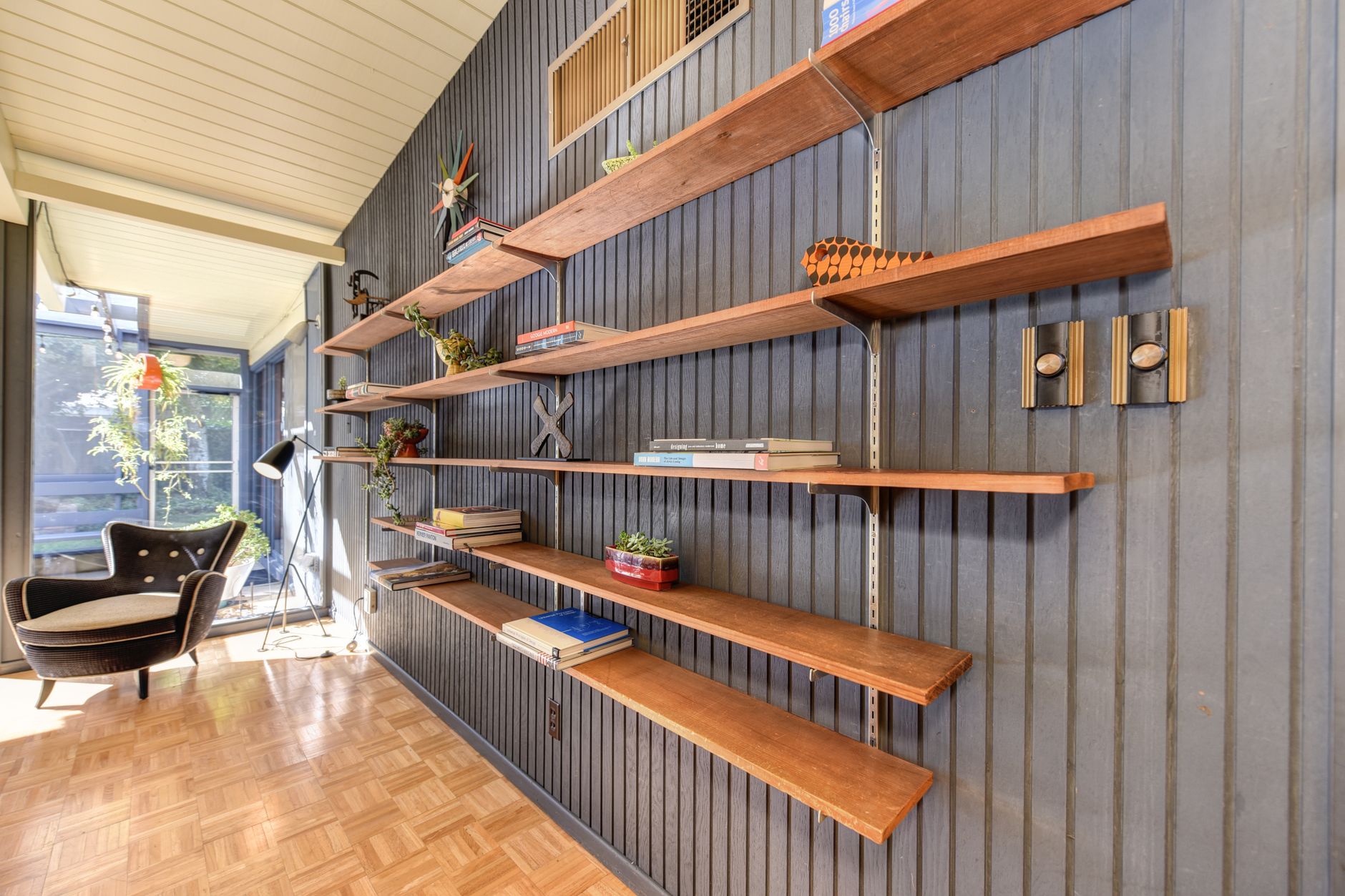
The report every Eichler sale generates
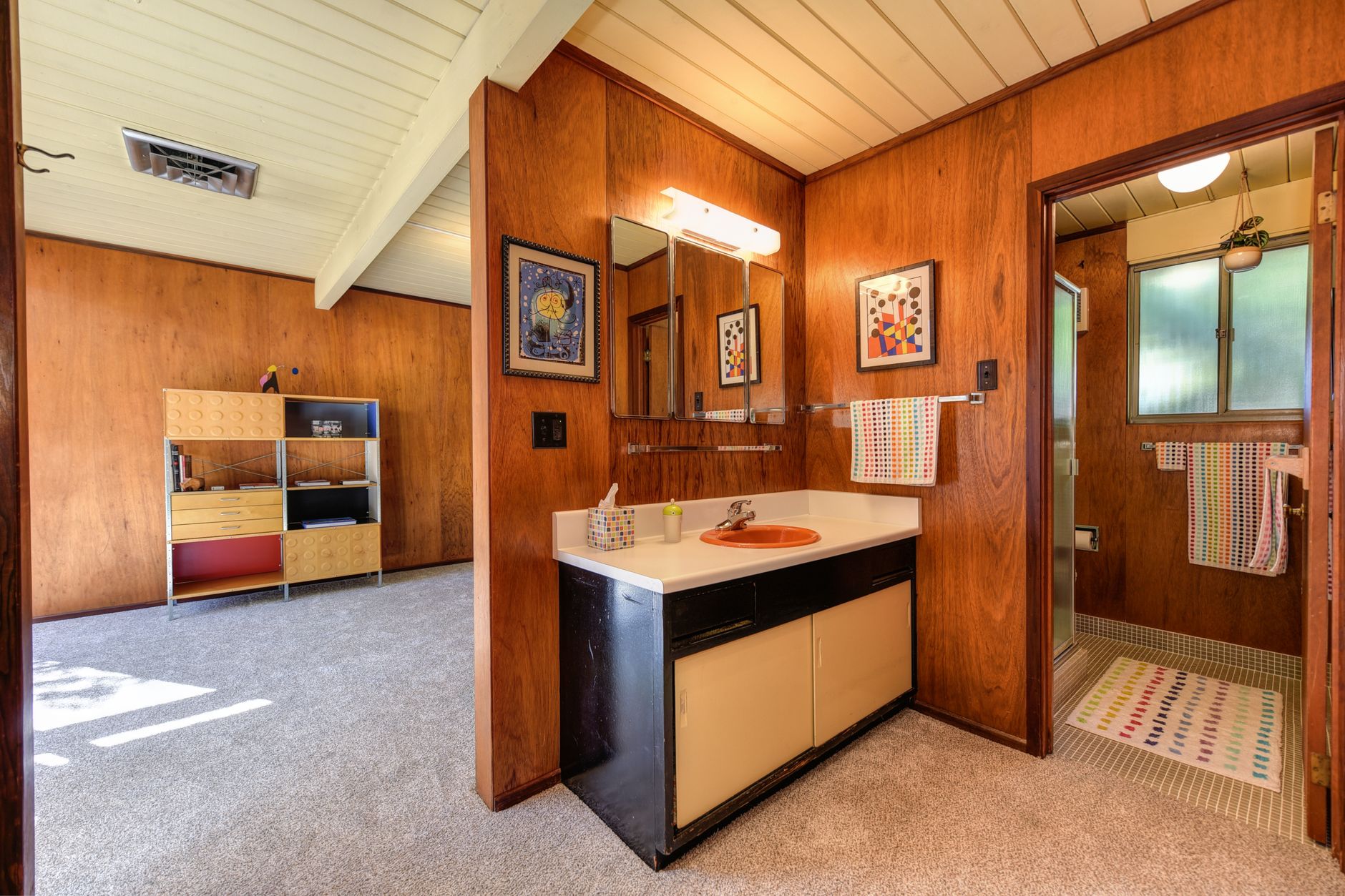
Eichler homes are built on concrete slab foundations with post-and-beam wood frames and, in many cases, mahogany interior paneling. That construction — documented in Palo Alto's Eichler design guidelines — means exposed structural timber, flat or low-slope roofs, and large expanses of glass rather than conventional stud walls. It also means that when a buyer orders a wood-destroying pest inspection, the report may flag conditions that a conventional raised-foundation house simply would not produce in the same way. Before you act on any findings, understand how the report itself is organized under California law.
Who writes the rules for these reports
The California Structural Pest Control Board (SPCB), a state agency under the Department of Consumer Affairs, licenses inspectors and sets the format every inspection report must follow. Branch 3 — Wood Destroying Pests and Organisms — covers the control of wood-destroying pests or organisms by the use of insecticides, or structural repairs and corrections, excluding fumigation. The inspector who walks through your Eichler holds a Branch 3 license. The report they produce must conform to a form approved by the board.
A written inspection report must be prepared and delivered to the person requesting the inspection and the property owner, or to the property owner's designated agent, within 10 business days from the start of the inspection. That clock starts the day the inspector sets foot on the property.
What the report must contain
The law lists what every report must include. A foundation diagram or sketch of the structure or structures inspected must indicate the approximate location of any infested or infected areas evident, and the parts of the structure where conditions that would ordinarily subject those parts to attack by wood-destroying pests or organisms exist.
Beyond the diagram, the report must cover the substructure, foundation walls and footings, porches, patios and steps, air vents, abutments, attic spaces, roof framing including eaves, rafters, fascias, exposed timbers, exposed sheathing, ceiling joists, and attic walls. Conditions usually deemed likely to lead to infestation or infection — such as earth-wood contacts, excessive cellulose debris, faulty grade levels, excessive moisture conditions, evidence of roof leaks, and insufficient ventilation — are to be reported.
For an Eichler, the post-and-beam frame, the atrium walls, and the wood fascias on a flat roof are all territory the inspector is required to address. Areas the inspector could not reach must also be noted.
Section 1: visible evidence, active problems
This is the part of the report that drives immediate action. Section I contains items where there is visible evidence of active infestation, infection, or conditions that have resulted in or from infestation or infection. In plain language: the inspector saw it, and it is happening now. Common Section 1 findings include drywood termite frass, mud tubes from subterranean termites, decay fungi damage, or wood members already structurally weakened by pest activity.
Section I findings typically identify items such as surface fungus and decay fungi damage, evidence of drywood termites, and termite-damaged wood. Section I recommendations include scraping and chemically treating decay fungi, replacing damaged wood as necessary, chemically treating drywood termites, and removing or covering accessible evidence of infestation.
If a sale is in escrow, the buyer may have a set period to have the repairs identified in the WDO report completed, including providing the escrow company with a Section 1 certification of the repairs. Who pays for Section 1 work is a negotiation between buyer and seller — the pest company does not decide that.
Section 2: conditions likely to lead to problems
Section 2 is not a current infestation. Section II items are conditions deemed likely to lead to infestation or infection, but where no visible evidence of such was found. Think of it as a list of vulnerabilities: a grade level that puts soil too close to wood, insufficient subarea ventilation, a flashing detail that channels moisture toward a beam end, or a wood-to-concrete contact at a post base.
For Eichlers specifically, flat roofs and exposed beam ends at overhangs are locations where moisture intrusion can accumulate quietly. Those conditions, if noted by the inspector, land in Section 2.
A critical point from the law: in no event shall conditions deemed likely to lead to infestation or infection be characterized as actual "defects" or as actual "active" infestations or infections, or as conditions needing correction as a precondition to issuing a certification. Section 2 items are not required to be cleared before a property closes escrow — but that does not mean they are trivial. Left unaddressed, they are a plausible road to a future Section 1.
Further inspection items: the third category
Some reports include a third designation. Further inspection items are defined as recommendations to inspect areas which during the original inspection did not allow the inspector access to complete the inspection and cannot be defined as Section I or Section II. On an Eichler, an atrium wall cavity, a built-in cabinet, or a roof assembly that cannot be probed without damaging finishes may generate this designation. If the owner authorizes opening an inaccessible area, the company must issue a supplemental report on what they find.
The separated report: ask for it at the start
At the time a report is ordered, the registered company or licensee must inform the person ordering the report that a separate report is available. If a separate report is requested at the time the inspection is ordered, the company must separately identify each recommendation as either: the infestation or infection that is evident, or the conditions that are present that are deemed likely to lead to infestation or infection.
Request the separated format when you order the inspection. It makes Section 1 and Section 2 items appear in clearly labeled columns, rather than as a single mixed list that requires guesswork to sort out.
Second opinions are your right
The board requires every report to carry this notice in boldface: "Reports on this structure prepared by various registered companies should list the same findings (i.e. termite infestations, termite damage, fungus damage, etc.). However, recommendations to correct these findings may vary from company to company. You have a right to seek a second opinion from another company."
Findings should be consistent across inspectors. Repair recommendations — and their costs — can vary significantly. On an Eichler, where correct repairs to a beam or a post base require understanding how the structure actually transfers loads, a second opinion is time well spent.
Where to check
- California Structural Pest Control Board — Consumer Information: license verification, complaint filing, inspection history search, and consumer brochures.
- California Business and Professions Code § 8516 — current statutory text: the full legal requirements for inspection report content and delivery.
- SPCB Termite Fact Sheet: plain-language explanation of treatment options including fumigation, heat, and local treatment.
- SPCB Fumigation FAQ: what fumigation does and does not cover, including the separate treatment required for subterranean termites.
- City of Palo Alto Eichler Neighborhood Design Guidelines: construction details — post-and-beam framing, slab foundations, radiant heat, mahogany paneling — relevant to understanding what inspectors are examining.
Tim McMullen · CA DRE #02016832
[email protected] · (415) 691-9272
- https://leginfo.legislature.ca.gov/faces/codes_displaySection.xhtml?lawCode=BPC§ionNum=8516.
- https://www.pestboard.ca.gov/about/consumer.shtml
- https://www.pestboard.ca.gov/forms/factsheets/termites.pdf
- https://www.pestboard.ca.gov/forms/fumigate.pdf
- https://www.pestboard.ca.gov/public/pr-6410_do.pdf
- https://www.cityofpaloalto.org/civicax/filebank/documents/64118
Tim McMullen, CA DRE #02016832. Real estate services provided by Tim McMullen, Broker, CA DRE #02016832. Figures are from recorded sales; nothing here is an opinion of the value of any home.