Foam or Membrane: What Eichler Owners Need to Know About Their Flat Roofs
Eichlers were designed with flat or very low-slope roofs, and the roofing system touches nearly everything else—insulation, ceilings, radiant heat, structural wood. Getting this decision right matters more here than on a conventional house.
Why a flat roof is different on an Eichler
A conventional house with a pitched roof is relatively forgiving. Water runs off fast, and the attic below gives you a buffer zone. An Eichler has neither. The roof deck is typically the ceiling. There is no attic. Standing water sits directly above tongue-and-groove wood or drywall, sometimes above a radiant heating system embedded in a thin concrete slab, and always above the post-and-beam framing that defines the whole structure. A slow leak does not announce itself; it works quietly into wood for months before it shows indoors.
Flat is also not perfectly flat. A properly built low-slope roof has enough pitch to drain—usually a quarter inch of drop per foot of run, sometimes less on older construction. Many Eichlers have drifted over decades. Decks settle, flashings compress, and what was marginal drainage becomes a pond after a heavy Bay Area storm.
Spray polyurethane foam
Spray polyurethane foam, usually called SPF or simply foam, became the dominant Eichler re-roofing choice starting in the 1970s and has stayed popular for practical reasons. It goes on in a continuous layer with no seams, which matters on a roof full of penetrations—skylights, vent pipes, the clerestory transitions typical of the style. It also adds meaningful insulation value in a single application, which is significant on a house whose original roof had almost none by modern standards.
Foam does require a protective topcoat—typically an elastomeric coating—and that coating needs reapplication on a schedule. Ignoring the recoat schedule is the most common way foam roofs fail. When the protective layer degrades, UV light breaks down the foam itself and the damage accelerates. A roofer inspecting an existing foam roof should probe any areas that feel soft or crumbly, check the coating thickness, and look closely at every penetration and parapet edge, because those are where moisture entry usually begins.
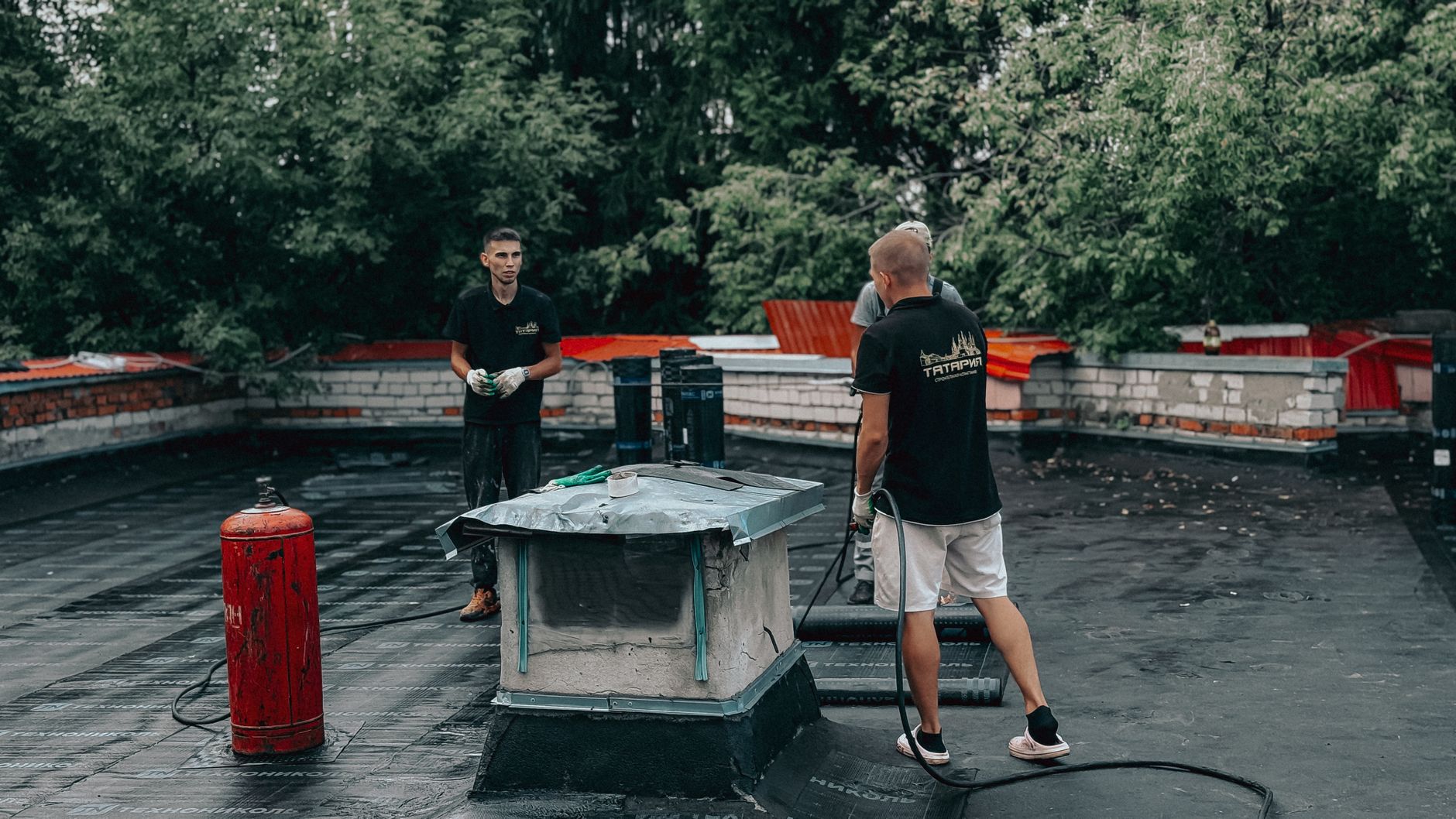
Foam also complicates future repairs. Cutting into it for leak investigation or skylight replacement requires someone who knows how to restore the assembly properly afterward.
Modified bitumen and single-ply membranes
Modified bitumen (mod-bit) and single-ply membranes such as TPO and EPDM are the main alternatives. These are proven systems on commercial and residential flat roofs throughout California. They are easier for a general roofer to work with and repair than foam, and a well-installed membrane with properly lapped and sealed seams is durable.
The tradeoff on an Eichler is that membranes do not add insulation by themselves. If the existing roof has inadequate insulation—and most original Eichlers do—a membrane replacement is an opportunity to add rigid insulation board underneath or on top of the new membrane. That step requires attention to drainage: added insulation thickness changes where the water goes, and a roofer needs to account for drain locations, scupper heights, and edge conditions before the work starts.
Seams and terminations matter most with membrane systems. A roofer should walk every linear foot of flashing—at walls, at skylights, at the fascia—and verify that termination bars or other edge details are secure and sealed.
Drainage: the issue that determines everything else
Regardless of roofing material, drainage is what protects the structure. Ponding water—defined by California's building energy code as water that remains 48 hours after rain—is a problem that no coating or membrane eliminates. It accelerates material fatigue and eventually finds a way in.
Before any re-roofing, a qualified roofer should map where water currently ponds. Sometimes the fix is as simple as clearing a blocked internal drain or scupper. Sometimes tapered insulation board is needed to reestablish slope toward the drains. Occasionally the deck itself has deflected and the solution is more involved. Knowing which situation you have before signing a contract matters.
What a roofer should check on an Eichler specifically
- Wood deck condition. The T&G or plywood decking should be probed at all penetrations, low points, and the perimeter. Soft or darkened wood is a sign of past or ongoing moisture intrusion.
- Existing insulation. Most original Eichler roofs have little or no insulation by current standards. Verify what is there, and understand that adding insulation above the deck during re-roofing is usually easier than doing it later.
- Skylight curbs and flashings. These are the highest-risk penetrations on any Eichler roof and should be inspected and resealed or replaced as part of the roofing scope.
- Fascia and barge rafter condition. These exposed wood elements are often damaged before the roof fails, and they are accessible only during a roofing project.
- Interior ceiling evidence. Before the crew arrives, document any staining on the T&G ceiling inside. That information helps a roofer trace the likely leak path.
Your city's building department—whichever city your tract sits in—determines whether a permit is required for re-roofing and what inspections apply. Ask before work begins, not after.
Tim McMullen · CA DRE #02016832
[email protected] · (415) 691-9272
Tim McMullen, CA DRE #02016832. Real estate services provided by Tim McMullen, Broker, CA DRE #02016832. Figures are from recorded sales; nothing here is an opinion of the value of any home.