Clear Your Gutters Before the Rains Return
September is the right month to clean gutters and look at what surrounds them. A flat or low-slope Eichler roof leaves little margin for a clogged downspout.

Why September, and Why It Matters on an Eichler
The Bay Area's dry season runs long, and that works against you. Months without rain mean debris — oak leaves, pine needles, seed pods, dust — settles into gutters and compacts. When the first real storm arrives, often in October or November, a clogged gutter can't move water fast enough. On a conventional pitched roof, overflow mostly spills away from the house. On the low-slope or flat roof common to Eichler homes, water has fewer places to go and more time to find a seam.
Clean gutters before the rain, not after the first one.
What to Clear
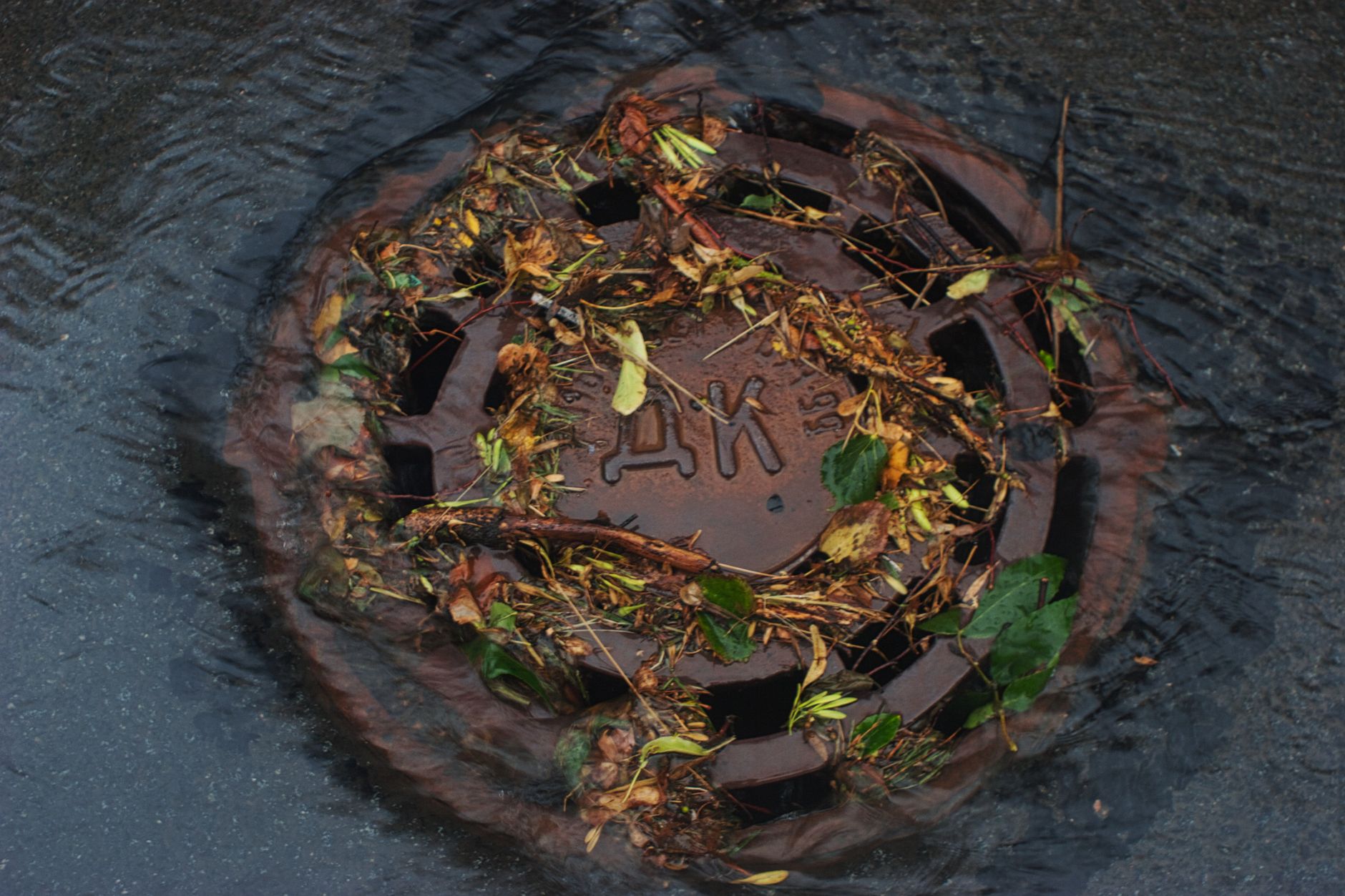
The job is straightforward. Work along the gutter from the high end toward the downspout, pulling out debris by hand or with a narrow scoop. Avoid anything that scrapes the gutter's interior coating if it has one. Once the gutter is clear, run a hose from the high end and watch what happens at the downspout. Water should move quickly and exit cleanly at the bottom. If it pools, the gutter sags at that spot. If it drains slowly, the downspout is partly blocked — a plumber's snake or a firm blast from the hose end usually clears it.
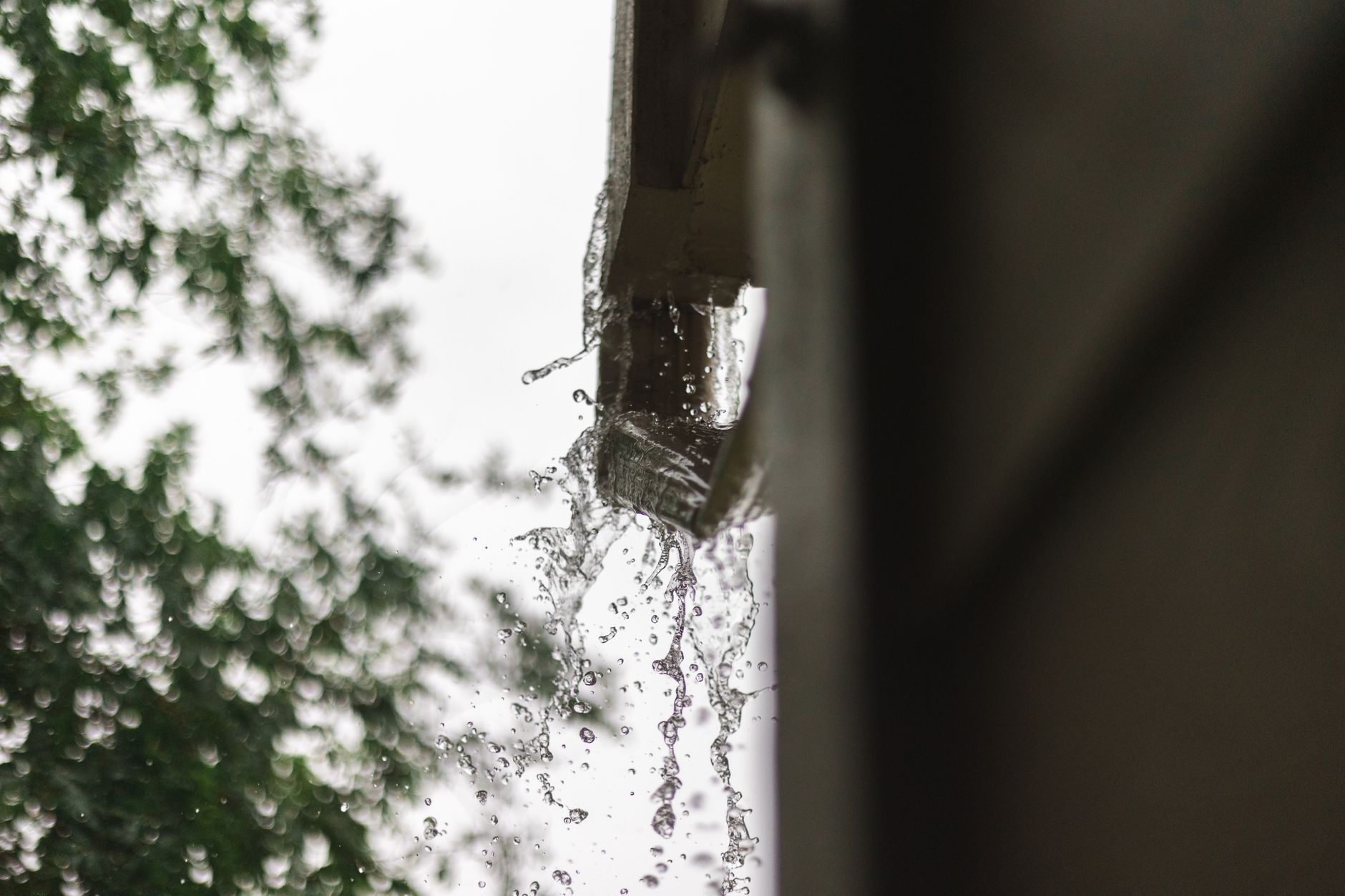
Flush the downspout separately: hold the hose at the top opening and let pressure do the work. If nothing moves, the blockage is somewhere in the elbow at the bottom, which is the most common place for debris to lodge.
What to Look at While You Are Up There
The gutter visit is a good excuse to look at adjacent conditions without turning it into a full inspection. A few things worth noting:
- Gutter hangers and fasteners. If a section has pulled away from the fascia, it will hold standing water and eventually fail entirely. A contractor can re-secure loose hangers; a licensed roofer or general contractor is the right call for anything involving the roof surface itself.
- The fascia board behind the gutter. Soft or discolored wood behind the gutter usually means water has been sitting there for a while. That is a conversation for a licensed contractor.
- Roof surface visible from the ladder. On a flat or low-slope Eichler roof, look for standing water marks, bubbling, or membrane that has pulled away from a parapet or penetration. You are noting, not diagnosing — a licensed roofer decides what it means.
- Any debris on the roof deck itself. Leaf piles trap moisture against the membrane. Sweep them off if you can reach safely.
If you are not comfortable on a ladder, hire someone. The inspection value is real; so is a fall.
Where the Water Should End Up
This is the part owners often overlook. A downspout that empties against the foundation, or into a planter tight against the house, is moving the problem rather than solving it. Eichler homes typically sit on a slab, and while the slab itself is not threatened by surface water the way a crawl space would be, water pooling at the foundation edge can work into post-and-beam connections or find its way under interior flooring over time.
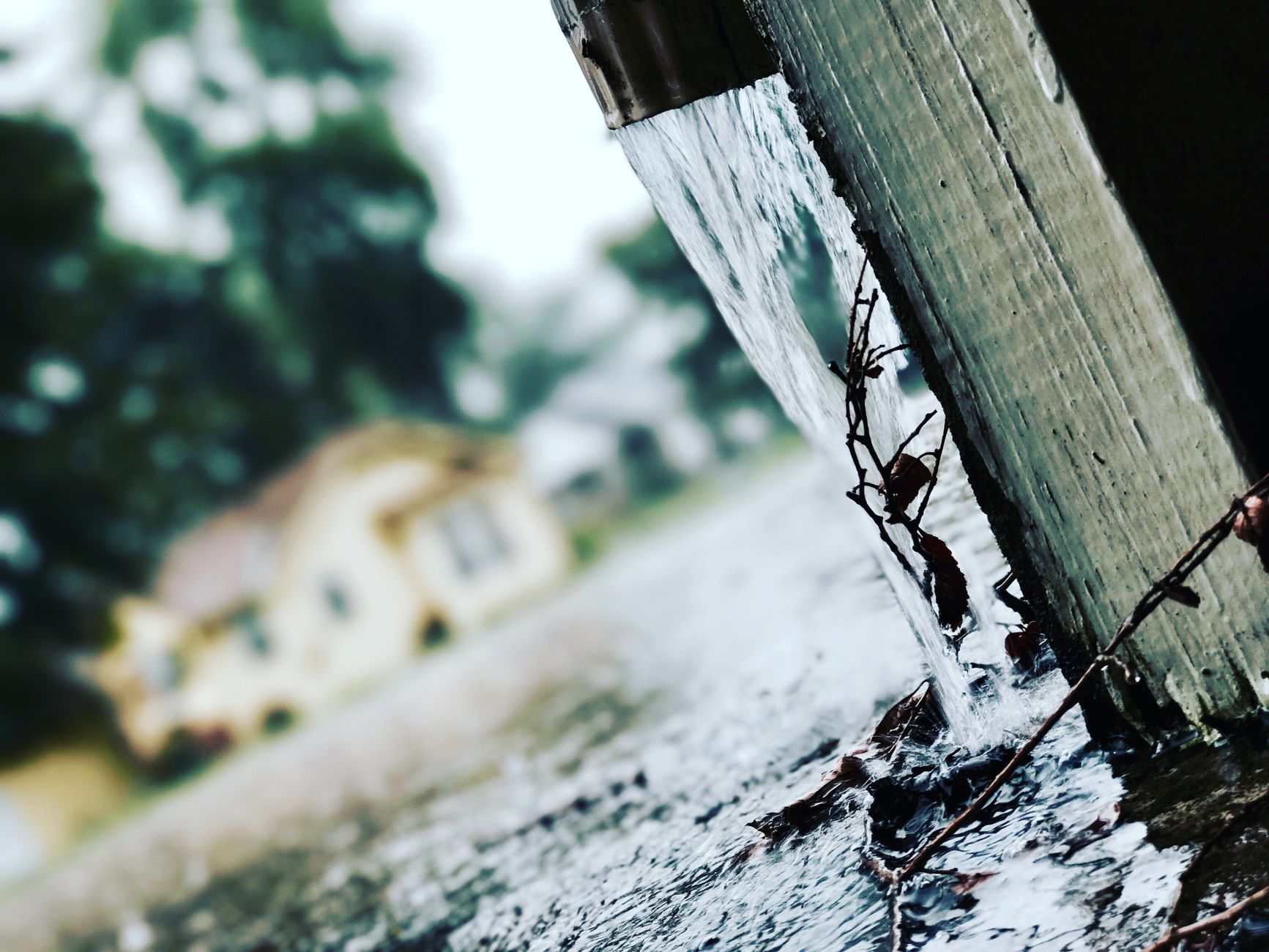
Downspout water should discharge onto a hard surface that slopes away from the house, into a splash block that directs flow toward the yard, or into a buried drain line if one exists. Check that the discharge point is clear and that nothing has shifted the splash block over the summer. If the downspout connects to an underground line, confirm the line is not blocked — a slow-draining underground line causes the same backup problem as a clogged gutter.
If your lot drains toward a neighbor's property or toward the street, that is a grading question. A licensed contractor or your city's public works department is the right resource, not a general rule from an article.
The Short Version
Clean the gutters in September. Flush the downspouts. Check the fascia and the roof surface while you have eyes on it. Make sure water leaves the downspout going away from the house. The first rain of the season will come faster than expected, and a flat roof with a blocked gutter has a short memory for dry-season neglect.
Tim McMullen · CA DRE #02016832
[email protected] · (415) 691-9272
Tim McMullen, CA DRE #02016832. Real estate services provided by Tim McMullen, Broker, CA DRE #02016832. Figures are from recorded sales; nothing here is an opinion of the value of any home.